
In the world of live music, there are performances built for spectacle. Thousands of fans, dazzling lights, pyrotechnics
And perfectly choreographed movements create nights meant to dazzle, overwhelm, and electrify. Carrie Underwood has built her career delivering exactly that:
Commanding vocals, unerring precision, and shows designed to captivate arenas packed with devoted audiences. But some moments in life, even amid grandeur, refuse to follow that pattern.
They exist in quiet spaces, invisible to the cameras and beyond the reach of choreography.
They are moments measured not in decibels or applause, but in the subtle cadence of love, courage, and human connection.
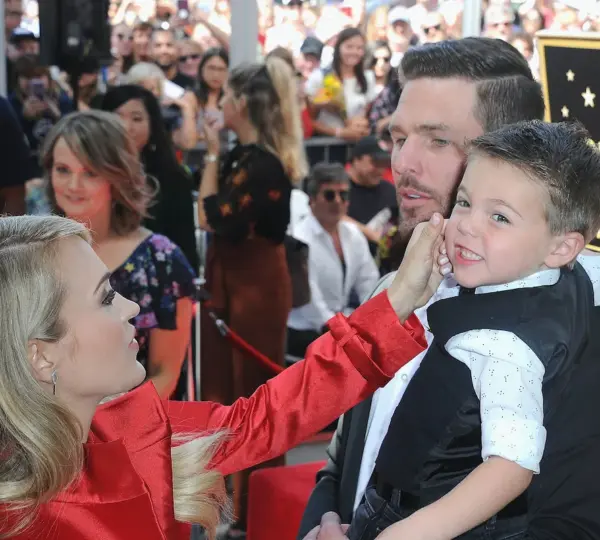
One such moment occurred during a recent tour stop where more than 18,000 fans had gathered to witness a night of hits, energy, and the unmistakable presence of Carrie Underwood — but what they experienced transcended performance.
The Anticipation of a Typical Night
The arena hummed with excitement as fans took their seats, expecting the familiar thrill of a Carrie Underwood concert.
They had come prepared for the spotlight, the stagecraft, the hits that have defined her career over nearly two decades: Before He Cheats, Jesus, Take the Wheel, Something in the Water.
For years, Underwood’s performances have been characterized by flawless execution and commanding energy, moments when the singer’s vocal prowess meets the spectacle of production design and audience enthusiasm in a seamless fusion.
The lighting team adjusted their rigs, stagehands moved props with precision, and crew members checked monitors and microphones in a quiet frenzy that anticipates the roar of thousands.
Fans wore glittering attire, waved light sticks, and sang along to the first few notes as the arena lights dimmed and the show began.
Yet none of this preparation could have predicted the quiet moment that was about to unfold — a moment that would suspend thousands in shared attention, not through spectacle, but through the simple, human power of love.
Behind the Stage: A Mother at Work in Silence
Away from the lights and the camera lenses, in a dimly lit corner behind the main stage, Carrie Underwood knelt beside her young son, smoothing his jacket with careful hands.

The boy, just learning the ropes of performing in public, was about to step onto the same stage that had hosted millions of fans over the years.
Underwood’s gestures were instinctual: a gentle pat on the shoulder, soft reassurance whispered into ears that were straining with nerves.
She was not performing for the audience. She was performing for one person — her child. There were no rehearsed lines, no cues, no instructions from a stage director. Her voice was calm, steady, and invisible to the thousands waiting beyond the curtain.
This was parenting in its purest form: guiding, protecting, and empowering.
The mother was preparing her child not to dazzle the world, but to embrace courage, to find strength in himself, and to experience a moment that, while fleeting, would matter forever.
The Walk Onto the Stage
When the boy stepped into the bright lights, the roar of the arena softened. Not immediately — the audience still clutched their phones, cameras poised, breaths held — but slowly, almost imperceptibly, the vast space became intimate.
The microphone looked oversized in his small hands. His voice was unpolished, hesitant, a stark contrast to the powerhouse performances fans had come to expect from Underwood herself.
He did not wave, nor did he search the crowd for validation. Instead, his eyes found one person in the audience: his father, Mike Fisher, former NHL star and longtime supporter of his family.
The moment was fragile, yet monumental. The hush fell naturally, as though the crowd instinctively recognized what was happening.

There were no cues, no instructions from production — just the silent acknowledgment of human courage on display.
A Mother’s Support at the Piano
Carrie Underwood sat at the piano, her fingers guiding each note with attentiveness rather than dominance. Every keystroke was measured, not to showcase her skill, but to lift her son’s voice, to wrap it in safety and encouragement.
Her role shifted from lead performer to guardian, mentor, and collaborator, following the moment instead of controlling it — instinctively, in a way only a parent can.
She occasionally glanced at him, nodding subtly, a smile tugging at the corners of her mouth.
Each note from the piano became a lifeline, grounding the boy while simultaneously shaping the emotional arc of the song.
This was a moment of pure artistry, not for applause or spectacle, but for love, patience, and trust.
Mike Fisher: Witnessing Courage
In the audience, Mike Fisher struggled to remain composed. Known for his composure on ice rinks and in public appearances, he was unprepared for the raw vulnerability emanating from the stage.
The sound of his child singing — courage interwoven with love and vulnerability — pierced the familiar armor of his public persona.
Tears came quickly, silently, uncontrollably. They were not tears of sadness, nor of shame, nor of performance-induced sentimentality.
They were tears of awe, pride, and recognition of something rare: the intimate display of a child stepping forward into the world, guided and supported by the unwavering presence of parents.
The Song and the Embrace
When the final note lingered and faded into the vast arena, there was no staging, no prearranged movement. There were no standing ovations orchestrated or scripted cues to amplify the dram
Carrie Underwood and her son embraced naturally, the kind of embrace that bypasses language entirely — a gesture of love that requires no explanation.
Mike Fisher joined them shortly after, completing the tableau of familial intimacy. In that moment, the arena — usually a space of thousands of separate experiences — felt as intimate as a living room.
Fans sensed it, too. Many later described the experience as witnessing a “memory in real time,” something rare and deeply affecting.
It was a shared acknowledgment that some moments, though unremarkable in scale or spectacle, carry a universality that resonates across thousands of individuals simultaneously.
Audience Reaction: Witnessing the Real
Fans later described the experience as surreal, not because it was staged for grandeur, but because it felt authentic.
Social media posts following the concert showed viewers grappling with the rarity of such a moment: 18,000 people united in attention, emotion, and silence, not in response to a pyrotechnic display or choreographed number, but to a child taking a brave step with the unconditional support of family.
Many fans wrote that it “didn’t feel like a performance.” It felt real.
The power of the moment lay not in vocal range or technical perfection, but in vulnerability, presence, and familial love made visible.
The Quiet Power of Parent-Child Connection
Carrie Underwood has long been celebrated for her commanding vocal power, emotional depth, and ability to connect with audiences. Her artistry has inspired millions and brought her into the pantheon of modern country and pop music legends.
Yet this moment, which bypassed lights, spectacle, and scale, showcased a different type of artistry — the quiet, unshowy, and enduring artistry of love.

For parents and audience members alike, the scene illustrated a simple but profound truth: support, presence, and reassurance matter far more than applause or technical perfection.
The bravery of stepping into something unknown, of being vulnerable in front of thousands, and of trusting the guidance of parents is universal. It is the kind of courage that resonates in every home, every classroom, and every community.
Legacy Beyond the Stage
That night, Carrie Underwood’s career and personal life intersected in a way that was tangible and timeless.
It was a reminder that behind every public figure is a human being who navigates roles, relationships, and responsibilities outside the spotlight. For Underwood, motherhood and artistry converged in a seamless expression of love, patience, and presence.
Moments like these endure not because of their spectacle, but because of their honesty.
The child’s voice, tentative yet brave; the mother’s gentle guidance; the father’s emotional witness — together, they created an experience that would linger long after the lights dimmed, not as entertainment, but as life unfolding in its purest form.
The Takeaway: Real Over Spectacle
Some nights in music are measured in decibels and dazzling visuals. Others are measured in human connection, courage, and authenticity.
This night — the night a mother knelt behind a curtain to calm her child, the night a father’s tears were visible to no one but those who witnessed him — became unforgettable precisely because it was real.
Carrie Underwood and her family reminded us that art is not only in the notes or the performance.
It is in the spaces between: the quiet moments, the gestures of support, the bravery of stepping into vulnerability, and the recognition that love, when present and unguarded, can resonate louder than any stage production.
In the end, the arena did not shrink. The thousands of fans did not leave changed because of choreography or spectacle.
They left having witnessed the human heart on display, an echo of family, courage, and authenticity that would stay with them long after the concert ended.
Closing Reflections
Some moments fade when the lights go down. Others stay. Not because they are loud.
Not because they are rehearsed. But because they are true.
The night Carrie Underwood and her son shared in quiet triumph illustrates that truth perfectly. It was a night of music, yes, but more importantly, a night of love — visible, imperfect, human, and unmistakably real.
This is the legacy of that moment: a reminder that some of the most powerful performances in life are not measured by volume or scale, but by courage, care, and authenticity.